Networking in the Industrial Internet of Things (IIoT) presents companies with major challenges: How can thousands of sensors be networked cost-effectively, securely, and over long distances? The answer is Narrowband IoT (NB-IoT). In this post, you will learn everything about the NB-IoT definition, the advantages of the technology, and why it is indispensable for professional applications.
Narrowband IoT Definition: A Standard for the Internet of Things
Narrowband IoT is a specialized wireless technology (LPWAN) standardized by 3GPP in 2016. Unlike conventional cellular communications, which are optimized for high data rates for smartphones, NB-IoT was specifically developed for machine-to-machine communication.
The NB-IoT definition is characterized by three core points:
- Low power consumption: Enables battery life of over 10 years.
- High capacity: Up to 50,000 devices can be efficiently networked per radio cell.
- Narrow frequency band: By using only a small part of the spectrum, efficiency is massively increased.
How does Narrowband IoT coverage work?
A decisive advantage over WLAN or Bluetooth is the Narrowband IoT coverage. The technology was developed for reliable communication in hard-to-reach environments.
- Deep coverage: Thanks to an indoor coverage of 20 dB, the signal penetrates deep into buildings, basements, and even underground.
- Long range: NB-IoT uses the existing infrastructure of mobile network providers, enabling a stable connection over long distances.
This makes NB-IoT the first choice for Smart City applications (e.g., parking sensors) or Smart Metering (reading meters in the basement).
IIoT Solutions: Why NB-IoT makes industry more efficient
By optimizing for small data packets, NB-IoT massively reduces the complexity of end devices. This not only lowers hardware costs but also significantly improves network efficiency. Companies can monitor large fleets of devices without having to build their own infrastructure (like gateways with LoRaWAN), as NB-IoT uses existing cellular networks.
Popular NB-IoT sensors for industry
In our range, you will find ready-to-use solutions for various measurement tasks:
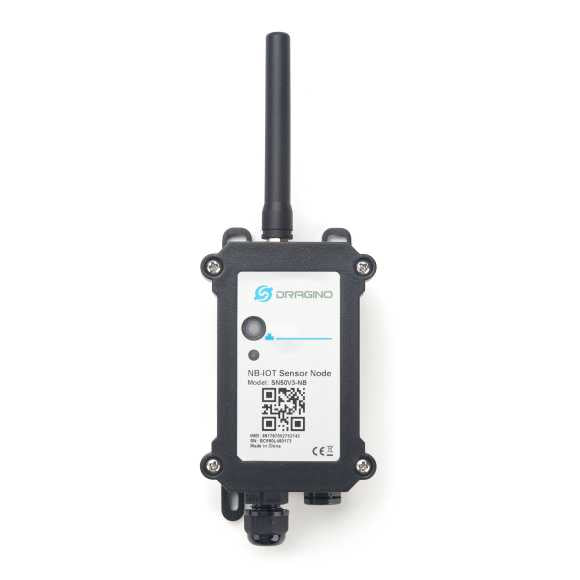
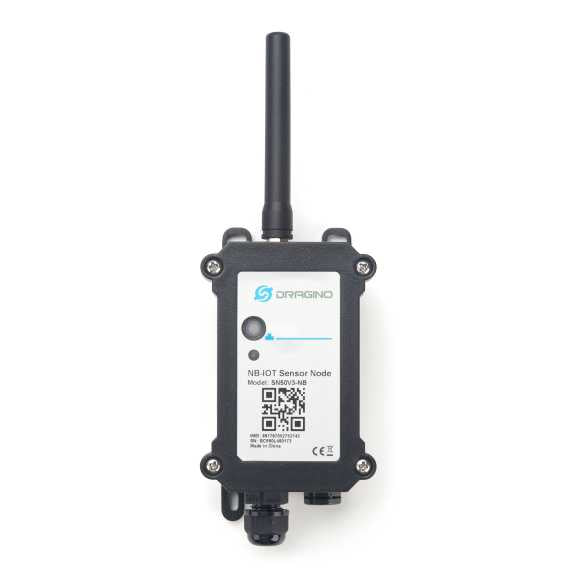
The Dragino SN50v3 is an all-rounder for various sensor nodes.
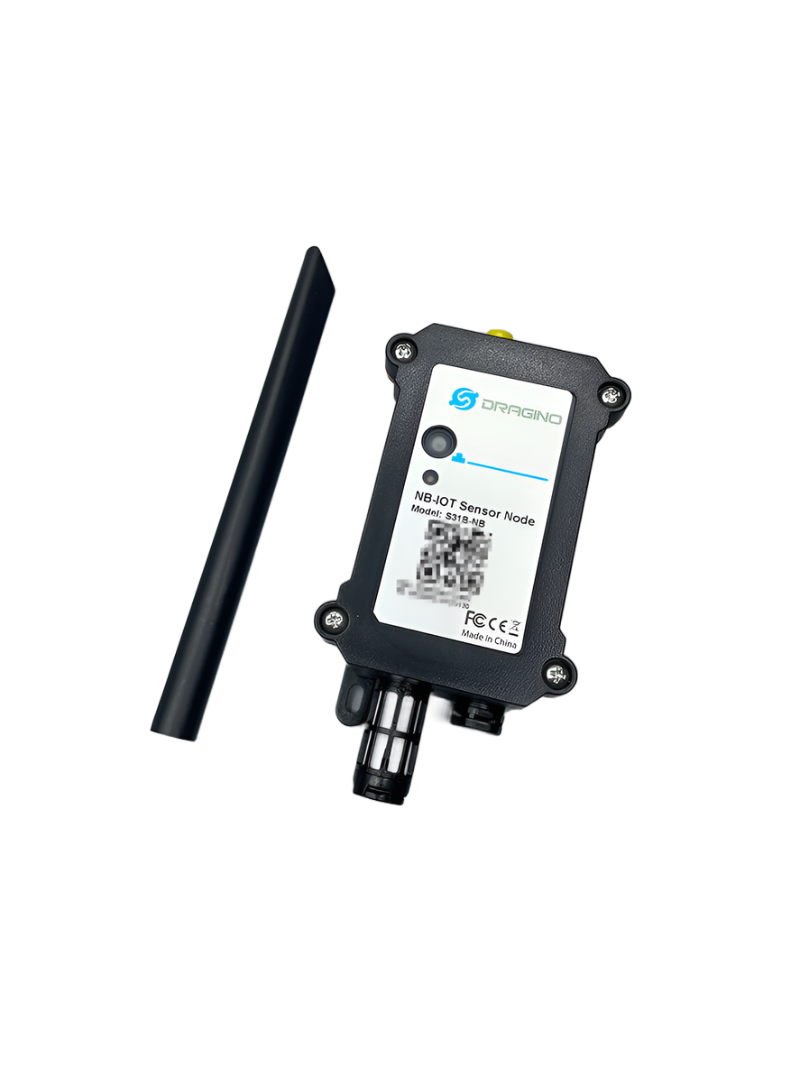
Professional sensor for outdoor temperature and humidity.
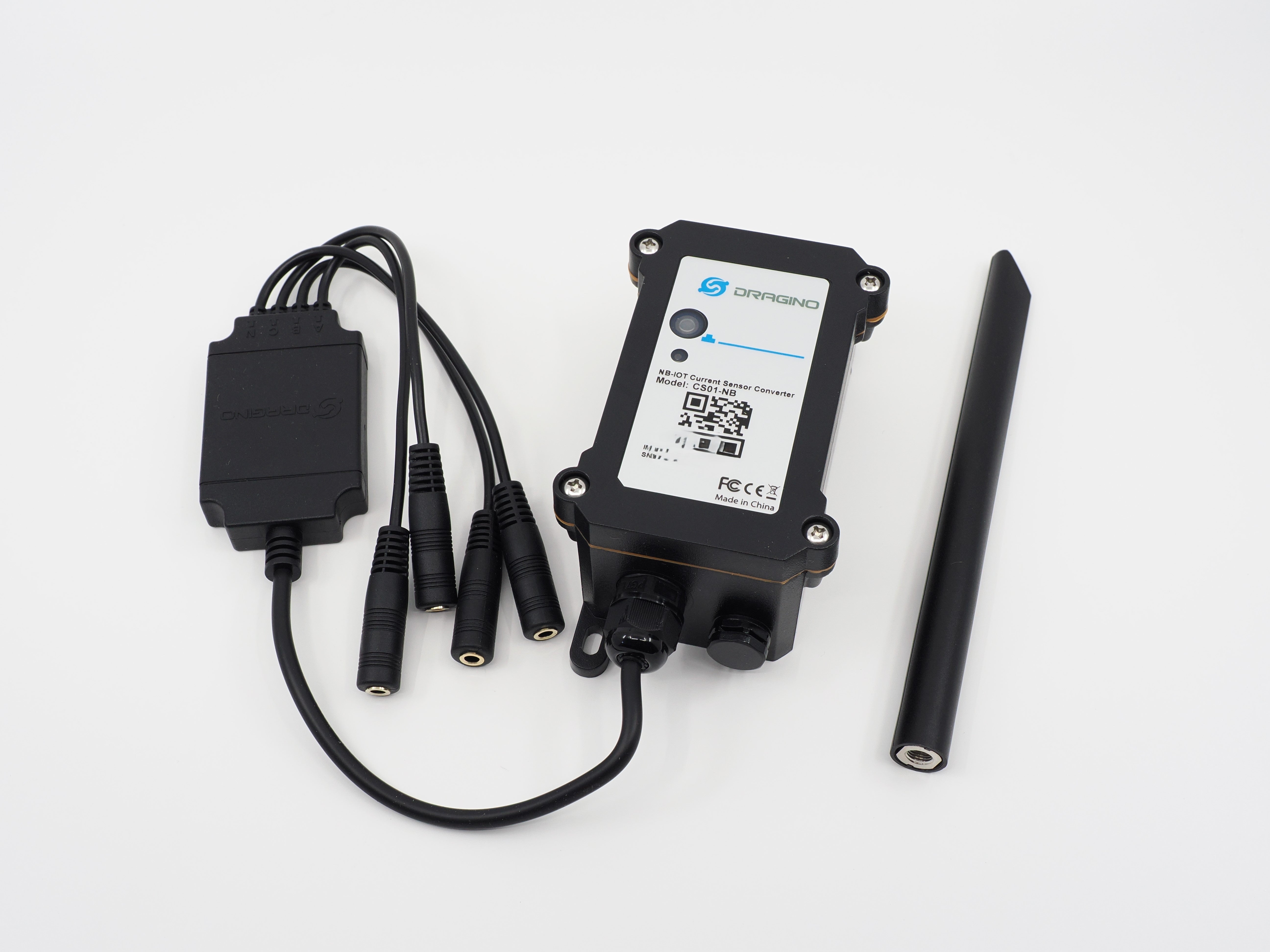
Ideal for energy management: The NB-IoT current sensor.
NB-IoT vs. LoRaWAN: Which standard fits your project?
Although both technologies belong to the group of LPWA (Low Power Wide Area) networks, they differ fundamentally in their infrastructure and application:
|
Feature |
NB-IoT |
LoRaWAN |
|
Infrastructure |
Existing cellular network |
Own gateways required |
|
Range |
Very large (due to network coverage) |
Several kilometers (local) |
|
Power consumption |
Low (battery > 10 years possible) |
Very low |
|
Operating costs |
Monthly network fees (SIM card) |
Very low (license-free) |
When is NB-IoT the better choice?
NB-IoT is particularly suitable for widely distributed sensors that are to be connected directly via the cellular network without their own base stations. It is the ideal solution for applications such as Smart Metering in urban areas or for sensors in basements and buildings with difficult reception conditions.
When is LoRaWAN more sensible?
LoRaWAN, on the other hand, is the better choice for local sensor networks (e.g., on a closed company site) where you want to maintain full control over the infrastructure and do not want to pay ongoing fees to mobile network providers.
Software Integration and IoT Platform
A central advantage of NB-IoT is the direct data transmission over the cellular network, which means that no dedicated gateway infrastructure is required on-site. Instead, the focus is on integrating the raw data into IoT platforms or cloud systems in order to store, visualize, and process it further.
Typical industrial applications for data processing:
- Smart Metering: Automated energy monitoring and consumption billing.
- Facility monitoring: Monitoring of infrastructure and system capacities.
- Environmental sensing: Measurement of climate and soil values in real-time.
- Agriculture: Networked sensors for optimized processes.
The Dragino NB-IoT sensors we offer can be flexibly integrated into your existing monitoring solutions and thus shorten the path from physical measurement to digital evaluation.
Conclusion: The future is narrowband
Whether for monitoring water quality, as an AI camera for utility meters, or for simple door monitoring – Narrowband IoT offers the most stable and efficient solution for the digitalization of industrial processes.
Benefit from our years of experience as a partner for research and industry. We support you in choosing the right hardware, from the first prototype to large-scale production.
Discover our entire portfolio now in our NB-IoT Collection:
FAQ – Frequently Asked Questions about Narrowband IoT
Is NB-IoT already part of the 5G standard?
Yes, Narrowband IoT is officially part of the 5G family. It is managed under the term Massive IoT, as it forms the basis for integrating millions of simple devices cost-effectively into the 5G ecosystem. Due to the standardization by 3GPP, the technology is future-proof and will continue to be supported in pure 5G networks.
How secure is data transmission with Narrowband IoT?
Security with NB‑IoT is very high, as it is based on the proven security standards of worldwide LTE mobile networks. Communication uses end-to-end encryption and secure authentication via the SIM card. This offers a significantly higher level of security than many unlicensed wireless standards.
Do I need a special SIM card for NB-IoT sensors?
Yes, for the operation of NB-IoT hardware, special M2M SIM cards (Machine-to-Machine) are required. These cards are optimized for industrial use, often offer worldwide roaming, and, unlike conventional smartphone SIM cards, are designed for extremely low data volumes and long runtimes.
What is the latency (delay time) with NB-IoT?
Compared to classic LTE, the latency with NB-IoT is higher and is often in the range of 1.5 to 10 seconds. This is due to the energy-saving operation of the modules. The technology is therefore not suitable for real-time applications such as voice transmission or the control of fast robots – however, this delay is completely unproblematic for sending sensor values.
Can NB-IoT devices be used worldwide?
Basically yes, provided there is a corresponding Narrowband IoT coverage in the destination country. Since NB-IoT operates on the frequencies of the mobile network providers, the devices must support the respective regional frequency bands. However, many modern NB-IoT modules at EXP-Tech are designed as "global versions" and support a variety of international frequencies.